
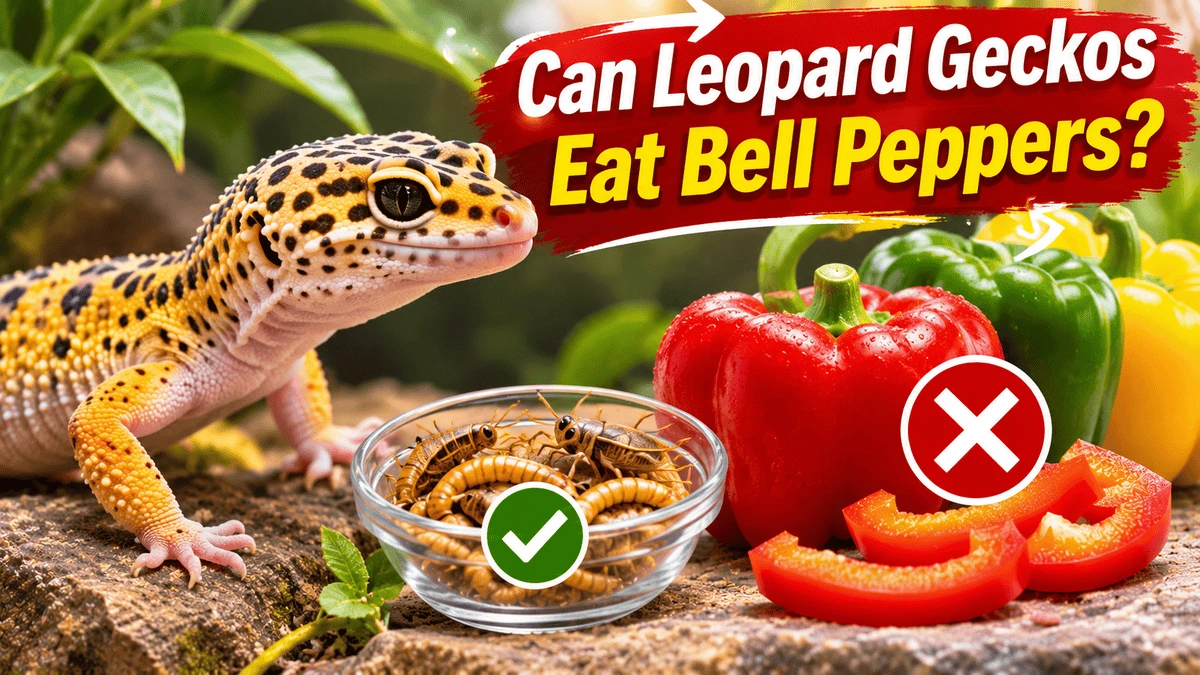
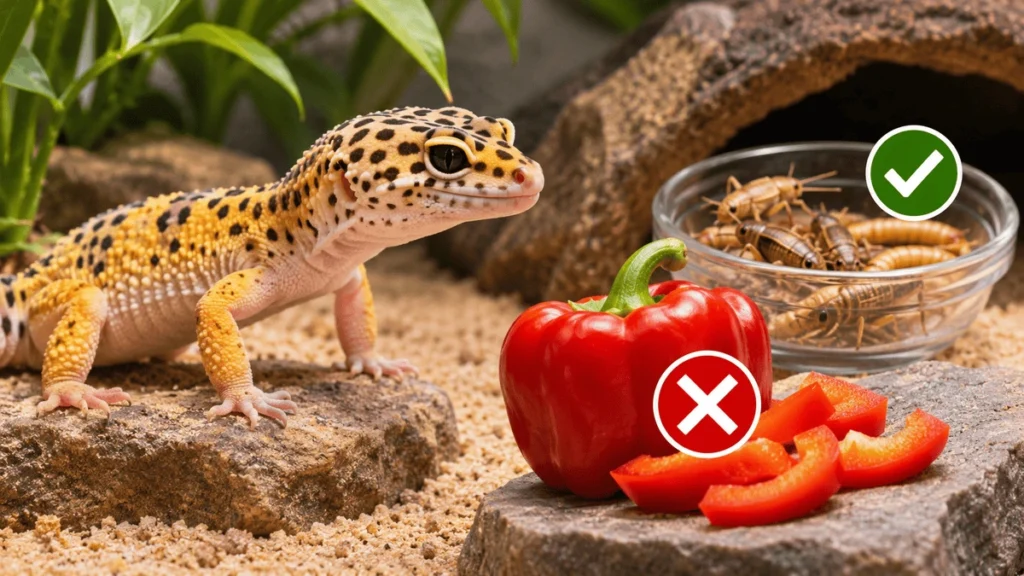
No, leopard geckos should not eat bell peppers. Although bell peppers contain vitamins and minerals that benefit humans, leopard geckos are insectivorous reptiles whose digestive systems are adapted to eating insects rather than plant-based foods. Therefore, bell peppers are not an appropriate food or treat for these reptiles.
Understanding what leopard geckos can and cannot eat is essential for keeping them healthy. Offering an unsuitable diet can contribute to nutritional problems and digestive complications. Instead of vegetables and fruits, leopard geckos need a varied diet of appropriately sized, nutritious live insects supported by proper calcium and vitamin supplementation.
In this guide, we explain why bell peppers are unsuitable for leopard geckos, what they should eat instead, how frequently to feed them, and which precautions every owner should follow.
Understanding Leopard Gecko Dietary Needs
Leopard Geckos Are Insectivores
Leopard geckos (Eublepharis macularius) are insectivorous reptiles. This means their natural diet consists primarily of insects and other small invertebrates.
Unlike omnivorous reptiles, such as bearded dragons, leopard geckos do not need vegetables, fruits, or leafy greens as part of their regular diet. Their digestive systems are adapted to processing animal-based food sources.
Suitable feeder insects provide the protein, fats, and other nutrients leopard geckos need for growth, energy, and normal body functions. However, not all insects have the same nutritional value, so offering different feeder species is important.
Essential Nutrients for Leopard Geckos
A healthy leopard gecko diet should provide several important nutrients, including:
- Protein: Supports muscle development, tissue repair, and normal growth.
- Calcium: Helps maintain strong bones and supports normal muscle and nerve function.
- Vitamin D3: Helps the body absorb and use calcium properly.
- Vitamin A: Supports normal vision, skin health, and other important body functions.
- Other vitamins and minerals: Help maintain normal metabolic processes and overall health.
Because feeder insects do not always provide a complete nutritional profile, proper gut-loading and reptile-specific supplements are important parts of captive leopard gecko care.
Why Bell Peppers Are Not Suitable for Leopard Geckos
1. Their Digestive Systems Are Adapted to Insects
The main reason bell peppers are unsuitable is that leopard geckos are specialized insectivores. Their nutritional requirements are met through an appropriately balanced diet of insects rather than plant foods.
Although a leopard gecko might investigate or accidentally bite a small piece of bell pepper, this does not mean the vegetable is appropriate for its diet.
2. Bell Peppers Do Not Provide the Nutrition They Need
Bell peppers contain vitamin C, vitamin A, fiber, and other nutrients that are useful in human diets. However, these nutritional benefits do not make bell peppers suitable for leopard geckos.
Leopard geckos need nutrients from appropriately prepared feeder insects and reptile-specific supplements. Feeding vegetables is not a substitute for providing the correct insect-based diet.
3. Vegetables Can Distract Owners From Proper Nutrition
Offering vegetables as treats can create confusion about what leopard geckos actually need to eat. Owners may mistakenly assume that a varied diet must include fruits and vegetables, as it does for some other reptile species.
For leopard geckos, dietary variety should come from different suitable feeder insects rather than vegetables.
Can Leopard Geckos Eat Red, Green, or Yellow Bell Peppers?
No. Leopard geckos should not be fed red, green, yellow, or orange bell peppers.
Although these varieties differ in their nutritional composition and ripeness, none is an appropriate food for leopard geckos.
| Bell Pepper Type | Suitable for Leopard Geckos? |
|---|---|
| Red bell peppers | No |
| Green bell peppers | No |
| Yellow bell peppers | No |
| Orange bell peppers | No |
It is best to avoid offering all bell pepper varieties, whether raw, cooked, chopped, or blended.
What Should Leopard Geckos Eat Instead?
Instead of bell peppers, provide your leopard gecko with a variety of appropriately sized feeder insects. Different insect species offer different nutritional benefits, helping owners create a more balanced feeding routine.
1. Crickets
Crickets are one of the most commonly recommended feeder insects for leopard geckos. They provide protein and can form an important part of a varied feeding routine.
Choose appropriately sized, commercially raised crickets and gut-load them before feeding. Remove any uneaten crickets from the enclosure because they can bite or injure your gecko.
2. Dubia Roaches
Dubia roaches are another useful feeder insect. They provide protein and other nutrients and are commonly used in captive leopard gecko diets.
Make sure the roaches are appropriately sized and purchased from a reliable feeder-insect supplier.
3. Mealworms
Mealworms can be included in a leopard gecko’s diet. They are convenient to store and offer another source of nutrition.
However, they should be offered as part of a varied feeding plan rather than relying exclusively on one insect species.
4. Silkworms
Silkworms are another suitable feeder option. They provide protein and moisture and can add variety to your gecko’s diet.
5. Black Soldier Fly Larvae
Black soldier fly larvae are useful feeder insects because they naturally contain calcium. They can help diversify the nutritional profile of a leopard gecko’s diet.
6. Waxworms and Superworms
Waxworms and superworms can be offered occasionally, depending on the gecko’s nutritional needs. However, these insects are relatively high in fat and should not become regular staple foods.
Maintaining variety while controlling high-fat feeder insects helps owners avoid an unbalanced feeding routine.
Foods Leopard Geckos Should Avoid
Leopard geckos have specific dietary requirements, so owners should avoid experimenting with foods intended for humans or other reptile species.
| Food | Recommendation |
|---|---|
| Bell peppers | Do not feed |
| Apples and bananas | Do not feed |
| Grapes and berries | Do not feed |
| Carrots | Do not feed |
| Lettuce and leafy greens | Do not feed |
| Tomatoes | Do not feed |
| Onions and garlic | Do not feed |
| Avocado | Do not feed |
| Cooked chicken and meat | Not appropriate as regular food |
Unlike omnivorous reptiles, leopard geckos do not need plant-based foods. Their diet should focus on suitable feeder insects and appropriate supplementation.
How to Prepare Food for Leopard Geckos
Preparing feeder insects properly is just as important as selecting the right insect species. Follow these basic practices to improve the nutritional quality and safety of your gecko’s food.
Gut-Loading Feeder Insects
Gut-loading means feeding nutritious foods to feeder insects before offering them to your leopard gecko.
For example, crickets and roaches can be given commercially prepared gut-loading diets. Suitable vegetables can also be used to feed feeder insects, depending on the species and preparation method.
These nutrients can then be passed on to the gecko when it eats the insects. Follow the recommended gut-loading period for your chosen feeder insect and product.
Calcium and Vitamin Supplementation
Calcium supplementation is essential because many commonly used feeder insects have an unsuitable calcium-to-phosphorus ratio.
Lightly dusting feeder insects with an appropriate reptile calcium supplement helps improve their nutritional value. A multivitamin supplement may also be needed as part of a balanced feeding program.
Vitamin D3 requirements depend partly on the gecko’s UVB exposure and the supplements being used. Excessive supplementation can also cause health problems, so follow the product instructions and seek advice from a reptile veterinarian about an appropriate schedule.
Choosing the Correct Insect Size
Feeder insects should be appropriately sized for your leopard gecko. A commonly used guideline is to choose prey no larger than the space between the gecko’s eyes.
Offering insects that are too large can increase the risk of swallowing difficulties and other feeding problems.
Providing Fresh Drinking Water
Always provide clean, fresh water in a shallow, stable dish. Replace the water daily and clean the container regularly.
Even though leopard geckos are adapted to relatively dry environments, access to drinking water is essential for their health.
How Often Should You Feed a Leopard Gecko?
Feeding frequency depends on the gecko’s age, body condition, activity level, and overall health. Younger leopard geckos generally need more frequent meals than adults because they are growing rapidly.
| Age Group | General Feeding Frequency |
|---|---|
| Baby leopard geckos | Daily, sometimes more frequently depending on growth and veterinary guidance |
| Juvenile leopard geckos | Generally daily or every 1–2 days |
| Adult leopard geckos | Generally 2–3 times per week |
These are general guidelines rather than fixed rules for every gecko. Monitor your pet’s weight and body condition to determine whether its feeding routine is appropriate.
Never leave uneaten feeder insects inside the enclosure for extended periods. Remove them after feeding to prevent possible injuries.
What Happens If a Leopard Gecko Accidentally Eats Bell Pepper?
If your leopard gecko accidentally bites or swallows a small piece of bell pepper, avoid panicking. However, you should not intentionally offer more.
Remove any remaining bell pepper from the enclosure and return to the gecko’s normal insect-based feeding routine.
Monitor your pet for unusual symptoms, including:
- Loss of appetite
- Unusual lethargy or reduced activity
- Abnormal droppings or diarrhea
- Regurgitation or vomiting
- Swelling or other unusual physical changes
If your gecko develops symptoms, stops eating, or appears unwell, contact a qualified reptile veterinarian. Do not attempt to treat digestive problems with home remedies or additional human foods.
Monitoring Your Leopard Gecko’s Health
Good nutrition is only one part of responsible leopard gecko care. Regular observation and appropriate enclosure conditions are equally important.
Observe Eating Habits and Behavior
Pay attention to your leopard gecko’s appetite, activity, body condition, and droppings. Changes in normal behavior can sometimes indicate an underlying health problem.
Regularly weighing your gecko can also help you identify unexpected weight loss or excessive weight gain.
Maintain Appropriate Temperature and Humidity
Leopard geckos need a properly maintained temperature gradient so they can regulate their body temperature. Provide a suitable warm area, cooler area, and humid hide.
Use a reliable thermostat to control heating equipment and digital thermometers to monitor temperatures. A hygrometer can help you monitor enclosure humidity.
Temperature and humidity requirements depend on enclosure design and equipment, so follow a reputable species-specific care guide rather than relying on a single temperature measurement.
Schedule Veterinary Check-Ups
Regular health examinations with a veterinarian experienced in reptile care can help identify nutritional deficiencies, parasites, and other health concerns.
Seek veterinary attention if your gecko experiences persistent appetite loss, abnormal droppings, unexplained weight loss, difficulty moving, or other concerning symptoms.
Frequently Asked Questions
Can leopard geckos eat bell peppers?
No. Leopard geckos are insectivores and should not be fed bell peppers. Their dietary requirements are met through suitable feeder insects and appropriate vitamin and mineral supplementation.
Can leopard geckos eat red bell peppers?
No. Red bell peppers are not suitable for leopard geckos. Their digestive systems are adapted to an insect-based diet rather than vegetables.
Can leopard geckos eat green bell peppers?
No. Green bell peppers should not be included in a leopard gecko’s diet. The same recommendation applies to red, yellow, and orange varieties.
Can baby leopard geckos eat bell peppers?
No. Baby leopard geckos should not eat bell peppers. Young geckos need appropriately sized feeder insects and suitable supplementation to support healthy growth and development.
Can leopard geckos eat other vegetables?
No. Vegetables such as carrots, lettuce, broccoli, and spinach are not appropriate foods for leopard geckos. They are insectivores and should receive nutrition from suitable feeder insects.
Can leopard geckos eat fruits?
No. Fruits such as apples, bananas, strawberries, and grapes should not be fed to leopard geckos. Their digestive systems are not designed for a fruit-based diet.
What is the best food for leopard geckos?
Crickets, appropriately sized dubia roaches, silkworms, and other suitable feeder insects are good options. Offering a variety of gut-loaded insects with appropriate calcium and vitamin supplementation helps provide balanced nutrition.
Can leopard geckos eat dried insects?
Live, appropriately prepared feeder insects are generally preferred because they provide suitable movement and nutritional value. Dried insects should not replace a properly balanced live-insect feeding routine.
What should I do if my leopard gecko eats a piece of bell pepper?
Remove any remaining pepper and monitor your gecko. If it develops unusual symptoms or appears unwell, contact a reptile veterinarian for advice.
Final Thoughts
So, can leopard geckos eat bell peppers? The answer is no. Although bell peppers are nutritious for humans, they are not suitable for leopard geckos because these reptiles are specialized insectivores.
Instead of experimenting with vegetables and fruits, focus on providing a varied selection of appropriately sized feeder insects, proper gut-loading, calcium and vitamin supplementation, and clean drinking water.
Responsible feeding practices, suitable enclosure conditions, and regular veterinary care can help your leopard gecko maintain good health throughout its life. When in doubt about a particular food or supplement, consult a reptile veterinarian before introducing it into your pet’s routine.