
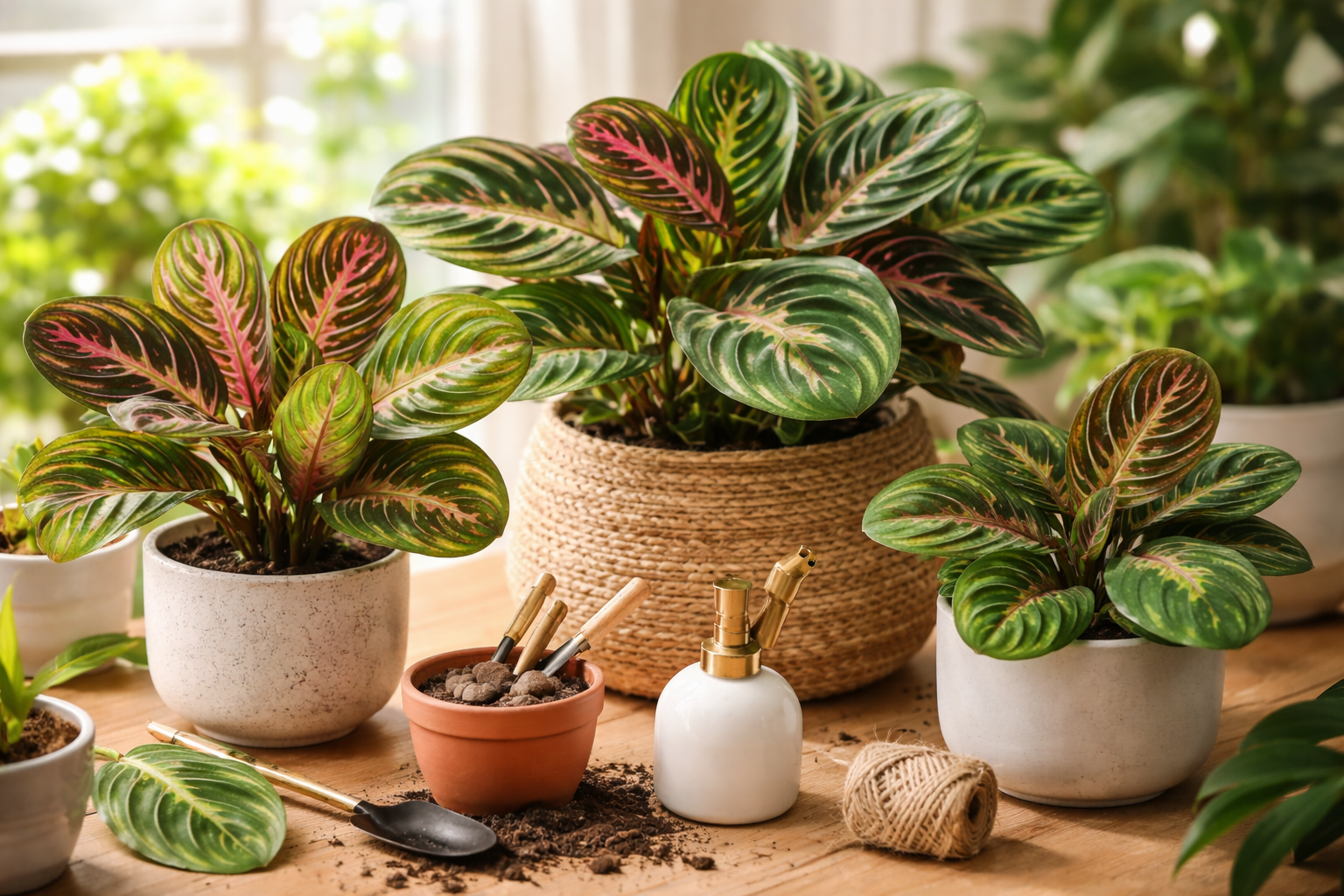
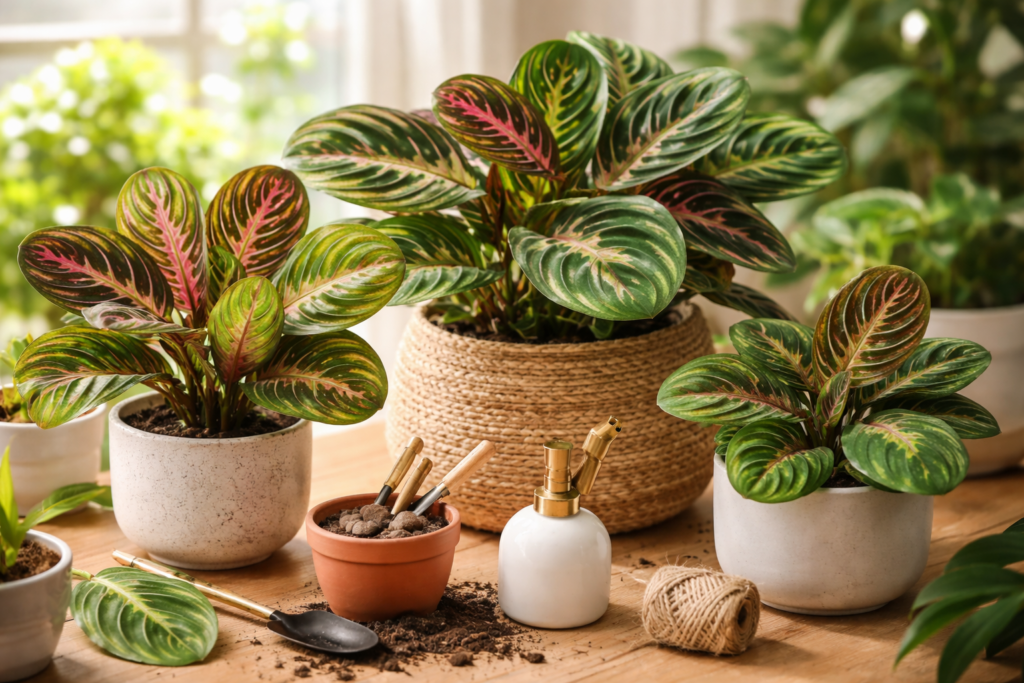
The prayer plant is a popular indoor houseplant known for its striking patterned leaves and unique nightly movement. Its leaves fold upward in the evening like hands in prayer, which is how the plant earned its name.
Native to tropical regions, prayer plants are admired for their decorative foliage and adaptability to indoor environments when properly cared for.
What Is a Prayer Plant?
The prayer plant belongs to the Maranta family and is most commonly identified as Maranta leuconeura. It is valued for its colorful leaf markings and compact growth habit, making it ideal for desks, shelves, and small indoor spaces.
Common features include:
- Oval-shaped patterned leaves
- Red or dark green veins
- Leaf movement at night
- Low-growing spreading structure
- Preference for warm indoor environments
Why Is It Called a Prayer Plant?
The plant folds its leaves upward in the evening and reopens them during daylight hours. This movement is part of its natural rhythm and helps conserve moisture in its native tropical habitat.
This behavior makes the prayer plant one of the most fascinating decorative houseplants.
Types of Prayer Plants
Several varieties are popular among indoor plant enthusiasts:
- Maranta Red Vein Prayer Plant
- Lemon Lime Prayer Plant
- Rabbit Track Prayer Plant
- Silver Band Prayer Plant
Each variety offers unique leaf color patterns while requiring similar care conditions.
Light Requirements for Prayer Plants
Prayer plants grow best in bright, indirect light. Direct sunlight can damage leaves and cause fading.
Ideal lighting conditions include:
- Filtered window light
- North-facing windows
- Indoor shaded corners with natural brightness
Low-light environments are tolerated but may slow growth.
Watering a Prayer Plant Properly
Prayer plants prefer consistently moist soil but should not sit in standing water.
Helpful watering tips:
- Water when the top layer of soil feels slightly dry
- Use room-temperature water
- Avoid overwatering
- Ensure proper drainage
Balanced watering supports healthy foliage growth.
Best Soil for Prayer Plants
Prayer plants thrive in well-draining soil that retains moderate moisture.
Recommended soil mixes include:
- Peat-based potting mix
- Coco coir blends
- Perlite-enhanced soil mixtures
This combination promotes airflow and root health.
Humidity and Temperature Needs
Prayer plants prefer warm, humid environments similar to tropical conditions.
Ideal growing conditions include:
- Temperature between 18°C and 27°C
- Moderate to high humidity levels
- Protection from cold drafts
Adding a humidity tray can support healthy leaf development indoors.
Fertilizing a Prayer Plant
Feeding your prayer plant during its active growing season helps maintain vibrant foliage.
Best practices include:
- Apply balanced liquid fertilizer monthly
- Reduce feeding during winter
- Avoid excessive fertilizer use
Moderate feeding encourages steady growth.
Common Prayer Plant Problems and Solutions
Brown Leaf Tips
Often caused by low humidity or inconsistent watering.
Yellow Leaves
Usually linked to overwatering or poor drainage.
Leaf Curling
May indicate insufficient moisture or temperature stress.
Adjusting care conditions usually resolves these issues quickly.
Is the Prayer Plant Safe for Pets?
Prayer plants are considered non-toxic to cats and dogs, making them a safe option for pet-friendly households.
How to Propagate a Prayer Plant
Prayer plants are easy to propagate using stem cuttings.
Propagation steps include:
- Select a healthy stem section
- Place the cutting in water or moist soil
- Keep in indirect light
- Wait for roots to develop
This method allows gardeners to grow additional plants easily.
Frequently Asked Questions About Prayer Plants
How often should I water a prayer plant?
Water your prayer plant when the top inch of soil becomes slightly dry. Avoid letting the soil dry out completely.
Why do prayer plant leaves fold at night?
This movement is a natural response to changing light levels and helps conserve moisture in its native habitat.
Do prayer plants need direct sunlight?
No, prayer plants grow best in bright indirect light. Direct sunlight can damage the leaves.
Is the prayer plant easy to grow indoors?
Yes, prayer plants adapt well to indoor conditions when provided with proper humidity, watering, and indirect lighting.
Can prayer plants grow in low humidity?
They can survive in moderate humidity but grow best in higher humidity environments.
Conclusion
The prayer plant is a beautiful and easy-to-maintain houseplant that adds color and movement to indoor spaces. With proper lighting, watering, and humidity, it can thrive as a long-lasting decorative plant in homes and offices.
{ “@context”: “https://schema.org”, “@type”: “FAQPage”, “mainEntity”: [ { “@type”: “Question”, “name”: “How often should I water a prayer plant?”, “acceptedAnswer”: { “@type”: “Answer”, “text”: “Water your prayer plant when the top inch of soil becomes slightly dry. Avoid letting the soil dry out completely.” } }, { “@type”: “Question”, “name”: “Why do prayer plant leaves fold at night?”, “acceptedAnswer”: { “@type”: “Answer”, “text”: “This movement is a natural response to changing light levels and helps conserve moisture in its native habitat.” } }, { “@type”: “Question”, “name”: “Do prayer plants need direct sunlight?”, “acceptedAnswer”: { “@type”: “Answer”, “text”: “No, prayer plants grow best in bright indirect light. Direct sunlight can damage the leaves.” } }, { “@type”: “Question”, “name”: “Is the prayer plant easy to grow indoors?”, “acceptedAnswer”: { “@type”: “Answer”, “text”: “Yes, prayer plants adapt well to indoor conditions when provided with proper humidity, watering, and indirect lighting.” } }, { “@type”: “Question”, “name”: “Can prayer plants grow in low humidity?”, “acceptedAnswer”: { “@type”: “Answer”, “text”: “They can survive in moderate humidity but grow best in higher humidity environments.” } } ] }